What Happened to Herculaneum?
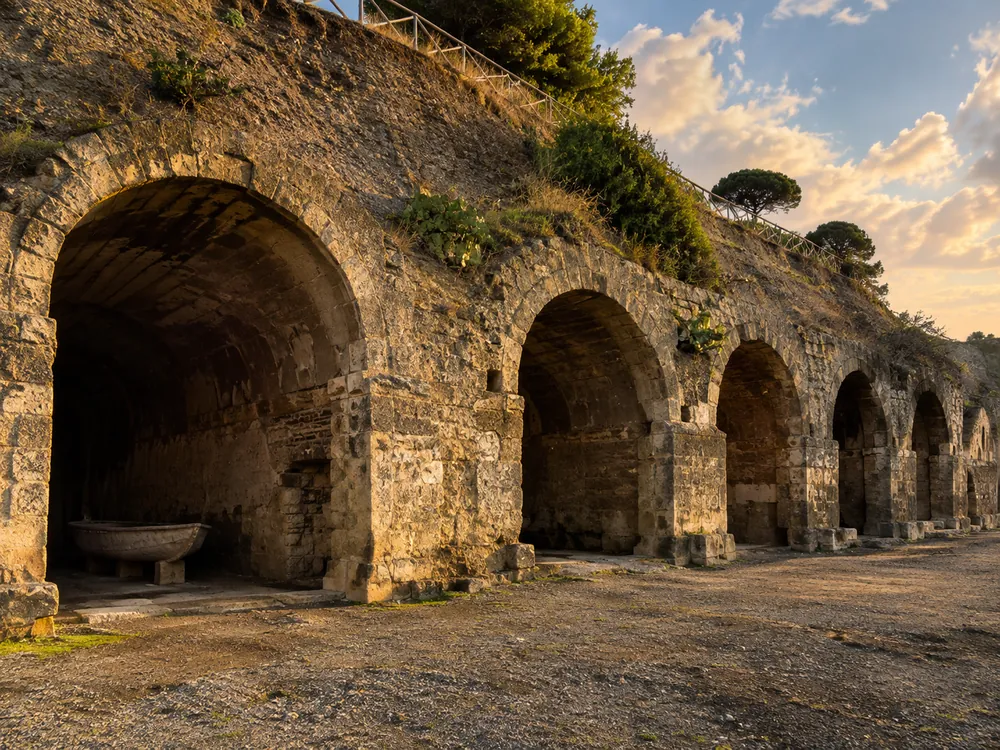
The year is certain; the day is not. Tradition says 24 August, but recent archaeological evidence points to autumn of 79 AD, so I will not print a confident date that the evidence cannot carry. What the eruption did is clearer: it pushed the shoreline out, leaving the fornici, the vaulted boat houses where the skeletons were found from 1980 onwards, about 400 metres from today’s sea. The 1,800-plus carbonized scrolls of the Villa of the Papyri made the site famous, though the villa itself is closed. The modern town on top, my town, is Ercolano, called Resina until 1969. How all this compares with Pompeii’s fate is on the comparison page.
The story lands differently when you are standing in the streets it happened to. The two-hour archaeologist-led tour below tells it on the spot.
Frequently asked questions
Are the skeletons at Herculaneum real?
Yes. More than 300 skeletons excavated from 1980 onwards in the fornici, the vaulted boat houses on the ancient shoreline, are real human bone. Pompeii’s famous figures are plaster casts of voids. The fornici are part of the normal visit; they are on the what-to-see list.
What exact day did Vesuvius destroy Herculaneum?
The year is certain: 79 AD. The day is debated. The traditional date is 24 August, but recent archaeological evidence points to autumn of that year, so anyone quoting a single confident date is ahead of the evidence.
Is Herculaneum still being excavated?
Most of the ancient town, roughly three quarters, remains buried under modern Ercolano, and the Villa of the Papyri is closed for excavation and accessibility works with no reopening announced. What is open still fills two to three hours comfortably.